
Sidney Previous Residents by Era
Previous residents research works backward from the property, then across the sources that cover the relevant years. The county’s online deed index does not begin at the start of the County’s land records. Historical directories are selective and have documented gaps. Maps show structures and street context, not people. Census schedules are a household anchor through their public release date. The table keeps those source types distinct so that an address trail does not turn into an unsupported claim about who lived there.
| Source | Years It Covers | Where Held | What It Shows |
|---|---|---|---|
| Recorder books and index | 1818 onward; online index from 7/1/1989 | Shelby Recorder counter, copy request, and CountyFusion | Recorded land instruments and transaction chronology |
| 1900 Atlas & Directory | 1900 | Ohio History Connection scan | Freeholders, official register, and Sidney maps, not a complete resident roll |
| Commercial directories | Selected 1902–1995 issues, with documented gaps | CPL, OGS, and physical holdings | Issue-specific name and address clues |
| Newspapers and maps | Verified local runs and 1887–1914 map editions | Ohio Memory, SCHS, library, and LOC | Notices, dates, building and street context |
| Federal census | 1790–1950 public release | NARA and library databases | Household and date anchor |
Begin with the parcel and Recorder for a transfer question. Begin with a known date and one actual directory issue or newspaper run for a household question. When the date sits before the online index, move to the office, library, or archive instead of skipping the period.
Sidney Previous Residents Before 1989
The online Recorder index begins July 1, 1989, but the office says its records date to 1818. That is an access boundary, not a gap in all recorded land history. Start with the current parcel card and its deed reference, then search the covered instrument portal if the date fits. For a prior conveyance that falls before the web cutoff, use the Recorder counter or copy-request process. The requester should carry forward the legal description as well as the address, since street labels alone can be a weak bridge across time.
The Shelby County Recorder index is the authenticated starting screen. 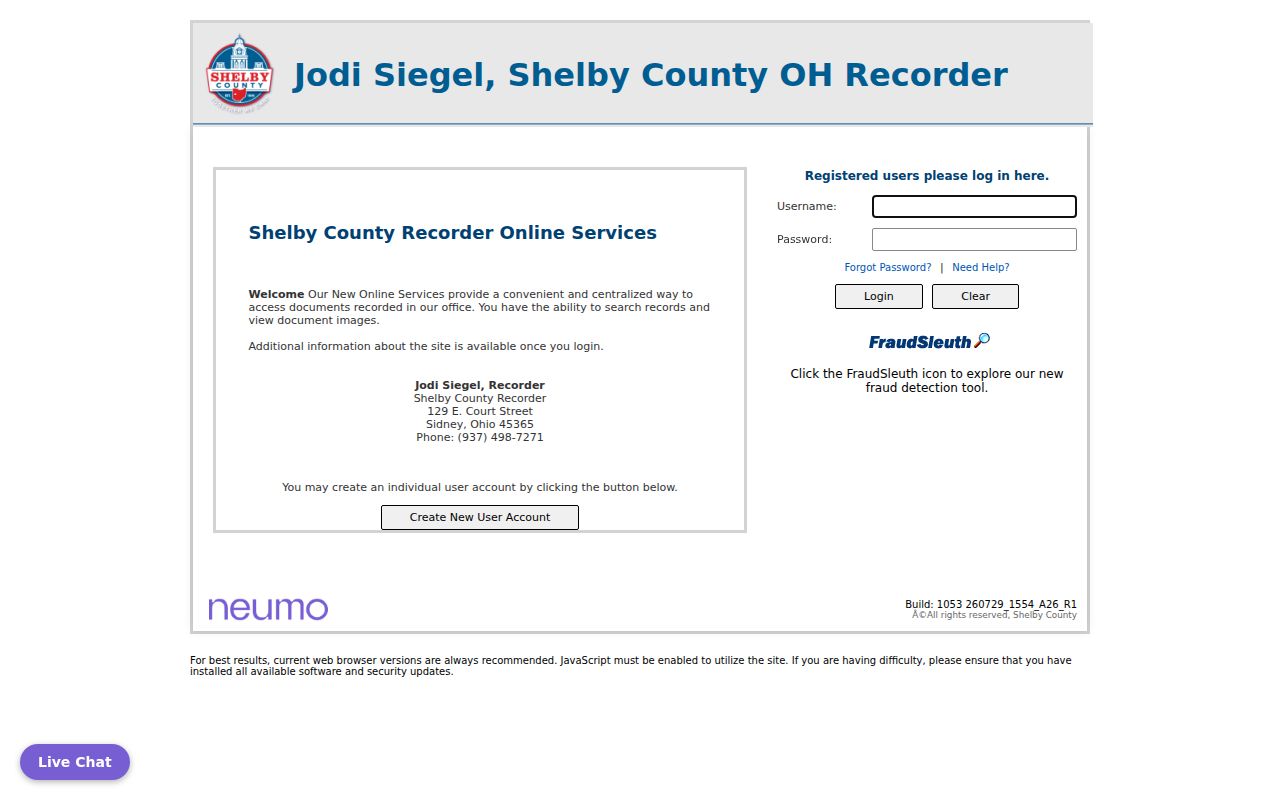 Research verified the login requirement but not an account-only field layout, document-image cost, or result columns, so those details should be confirmed with the Recorder.
The Recorder’s copy-request route is the practical bridge when an earlier book reference is known. Supply volume and page, complete the office form, send it by fax or email, and use one of the listed payment methods. Research records email or fax copies at $2 per page and long-distance fax copies at $4 per page. Requests are processed in received order, with no fixed response time promised. Carrying a deed book and page from one search step to the next turns an old-address question into a request the office can actually locate.
Sidney Previous Residents in Map Layers
Sanborn maps are useful when a house history needs to distinguish the building from the people associated with it. SCHS links Sidney editions from 1887, 1892, 1898, 1907, and 1914, and the Library of Congress describes the 1898 edition as 18 sheets. Compare a map near the beginning and end of the time window to look for a building change, street context, or a feature that helps identify the right parcel.
The City history notes graded streets beginning in 1896, paving and sewers around 1903, and full paving by 1950. No authoritative citywide renumbering date was found. Treat a changed-looking number as a reason to cross-check a map, directory page, and legal description, not as proof of a universal conversion.
Sidney Previous Residents and Early Geography
Early trails can run outside modern Shelby County. Shelby was established in 1819, and Sidney became the county seat in 1820 after the first court met at Hardin. SCGS cautions that pre-1819 material may lead to Hamilton, Montgomery, or Miami County repositories. This records-geography detail matters most when a property or family trail seems to vanish before the current county’s early books.
For estate and heir work, SCGS’s local abstract holdings include will abstracts, executor and administrator lists, divorce actions, and other historical aids. They are finding tools rather than certified originals, but they can identify a record type and date worth taking to the courthouse custodian.
Trace Sidney Previous Owners Through Deeds
A deed chain is the ownership portion of a previous residents search. Begin with the present parcel record and preserve its parcel ID, legal description, deed volume and page, and listed owner. Locate the recorded purchase document and read the transferring parties and description exactly as shown. The seller in one transfer may provide the next name to investigate as a buyer in an earlier transaction. Divisions, estates, corrections, mortgages, and changed legal descriptions can interrupt a simple chain, so each document needs its own date and reference.
- Use the Shelby Auditor property search to capture the current parcel ID, legal description, deed volume and page, and any relevant date.
- Find the current purchase or conveyance in the Recorder route if it falls within the online coverage.
- Use the named seller and the same legal description to locate the preceding purchase or other relevant instrument.
- Repeat backward, recording whether a document reflects a conveyance, estate, correction, or another event.
- When the trail reaches the 1989 web boundary, shift to the Recorder’s office records or request path rather than omitting the earlier period.
- Grantor and grantee
- The party transferring an interest and the party receiving it in a recorded instrument.
- Chain of title
- The documented sequence of recorded ownership-related instruments for a property.
- Legal description
- The lot, block, subdivision, or other land description that helps match older deeds when an address changes.
Sidney Previous Residents in Directories and Census
Once the deed trail identifies a property and time period, switch to the household evidence. Use directory issues that actually exist around a census date, copy the spelling and address exactly, and compare them with newspaper notices, the legal description, and the census. The 1900 Atlas & Directory is a freeholder and official-register source, so it cannot be treated as a complete census of city residents. Commercial holdings are discontinuous, and one missing issue does not establish that a family moved.
The Shelby County Historical Society archives provide a local repository route.  SCHS connects researchers to newspapers, atlases, maps, and local-history materials that can bridge a documented directory gap.
The National Archives census research page explains the federal census path. 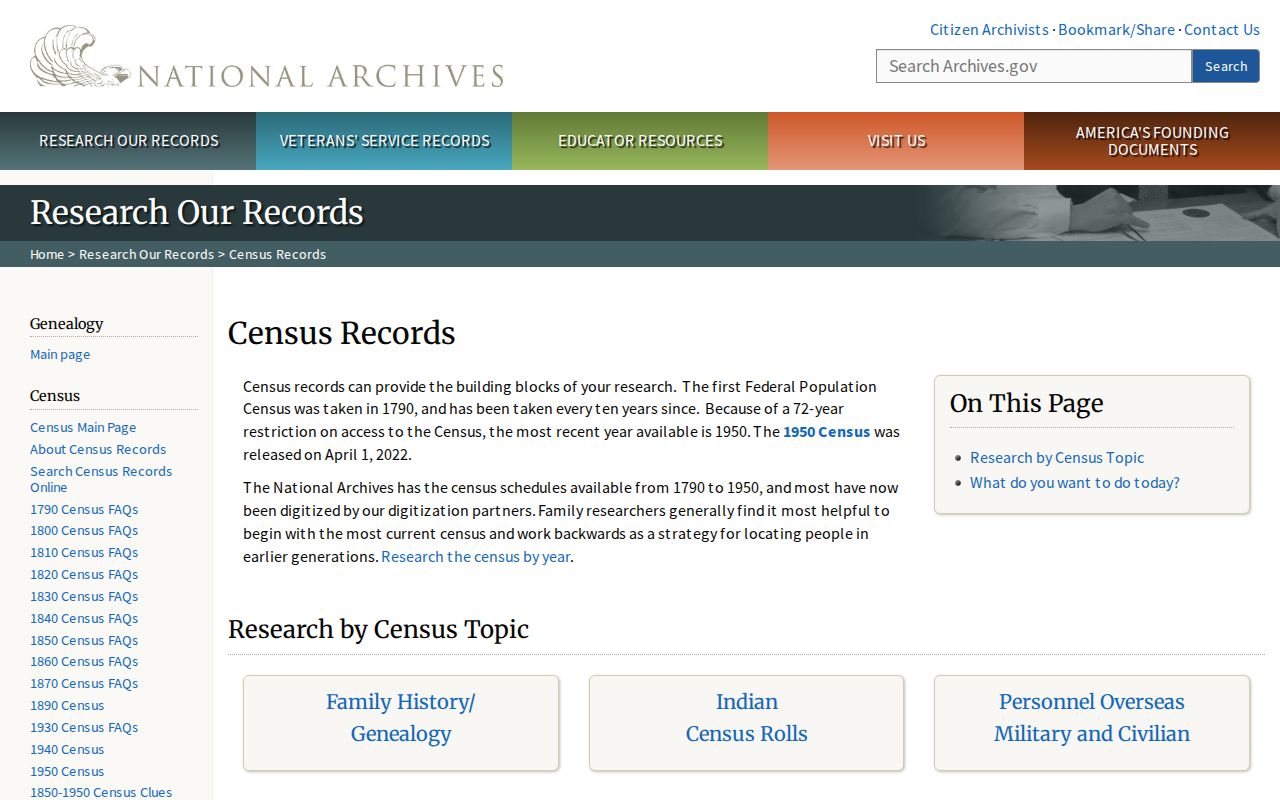 Census schedules are useful household anchors through the 1950 public release, but a name and location still need to be matched carefully.
The documented commercial-directory shelf has important breaks. A microfilm block identifies 1902, 1929, and 1931 among the 1902 to 1931 material, with 1903 to 1928 and 1930 missing. The Shelby County Complete Classified Business Directory has 1943/44, 1946, 1948, 1950, 1952/53, 1955, 1957, and 1959/60 issues, with several named gaps. OGS lists selected 1948, 1955, 1974, 1976, 1978–79, and 1995 Sidney volumes. A gap is a reason to look at newspapers, maps, and census, not a basis for declaring a household absent.
Sidney Previous Residents at Trail Endpoints
Newspapers, probate files, and cemetery channels can help close an older household trail. Shelby Probate identifies marriages, estates, guardianships, and other court-held historical material, but adoption, mental-health, and certain identity-related material is confidential. Its remote case access describes case data from 1997 forward and document images from 2012 forward, with older records at the court or on microfiche or film. These limits are part of the trail, not an invitation to infer a protected fact.
Graceland Cemetery publishes manager contact, policies, pricing, and a section map. 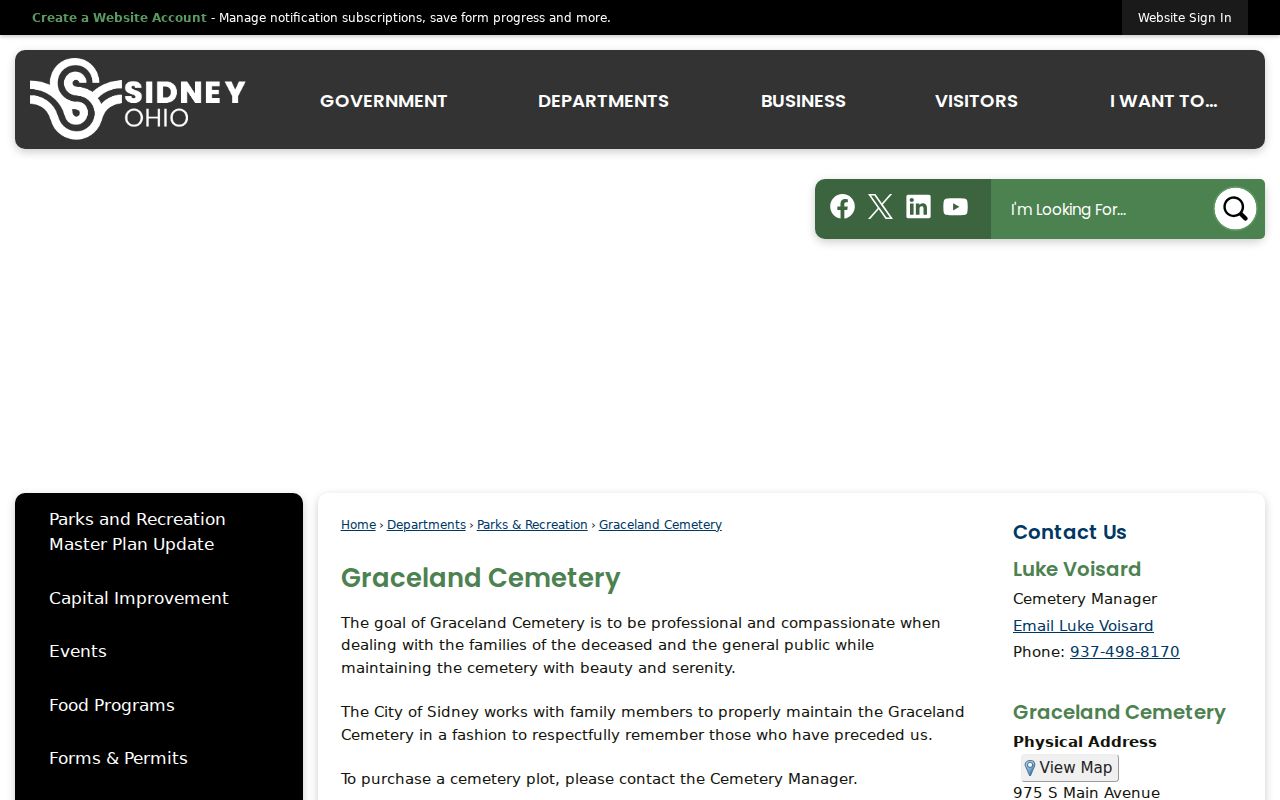 The City page does not offer an online interment-name search, so ask the Cemetery Manager for the proper access path instead of claiming a public index.
Shelby Probate lists marriages, estates, guardianships, land sales, name changes, naturalizations, and medical registries among its historical areas. It states estates and guardianships from 1825 forward and birth and death material for 1867 to 1908, while later birth and death questions go to ODH. A request by mail should identify the record type, name, approximate date, and include a self-addressed stamped envelope. The office directs requesters to ask by email first about page count and cost, then send payment. Its listed charge is 10 cents per page and $3 for a certified copy, with confidential material remaining confidential.
Note: An obituary, cemetery lead, or local abstract can guide the search, but none substitutes for a certified custodian record.
Sidney Previous Residents as Households
Ownership and residence are different questions. A deed may identify the recorded parties, while a census, newspaper, or available directory can provide a household clue for the same time period. Pair each selected issue with a nearby census year and retain the original date. The full source-by-source collection details remain in the Sidney directory book, where the documented year gaps and repository routes can be checked.
Older address work has the strongest result when it identifies what is known, its date, and the source that produced it. A gap should remain a gap. The next official or historical custodian can then be approached with a precise request.
When one source conflicts with another, keep both rather than picking the more familiar name or address. A parcel card’s listed owner, a Recorder grantor or grantee, and a census household answer different questions and can refer to different dates. That distinction is central to responsible Sidney previous-residents research.
Lawful use. Sidney house history and family history are lawful purposes for a backward record trail. Never use a past address or name to pursue, harass, intimidate, or harm a living person.