
Sidney City Directory Holdings
Sidney has several historical directory paths, but they do not form a year-by-year resident roll. The 1900 Atlas & Directory is a freeholder directory and official register with county and Sidney maps. It is valuable for property and local-government context, yet it is not a complete list of Sidney residents. The earliest located commercial Sidney issues are later. Use the holding dates as a starting point and verify the actual volume before drawing a conclusion about a household.
| Collection | Known years | Where held | How to use it |
|---|---|---|---|
| American Atlas Co. Atlas & Directory | 1900 | Ohio History Connection scan | Freeholder and official-register context, plus maps |
| Commercial Sidney directories | 1902, 1929, 1931 | Cleveland Public Library / Gale holding guide | Microfilm block, with documented breaks |
| Classified business directories | 1943/44, 1946, 1948, 1950, 1952/53, 1955, 1957, 1959/60 | Cleveland Public Library microfilm / Gale | Business and local-place clues, not a complete household roll |
| OGS Sidney directory holdings | 1948, 1955, 1974, 1976, 1978-79, 1995 | Ohio Genealogical Society | Ask about visit or request availability |
| Newspapers, maps and census | 1861-1950, by source | Ohio Memory, SCHS, NARA | Bridge a gap or anchor a date |
These shelves complement one another. A directory date can suggest where to look next, while a map or census schedule can test the place and period. The named sources should not be flattened into one database.
Sidney Historical Directory Gaps
The commercial holding record is discontinuous. In the 1902-31 microfilm block, 1903 through 1928 and 1930 are reported missing. The classified business-directory run also has named breaks: 1945, 1947, 1949, 1951, 1956 and 1958. Later Ohio Genealogical Society holdings are selected years, not proof that every intervening issue was published or survives. A missing directory year is therefore not evidence that a person moved away.
Use a nearby commercial issue, then add a newspaper notice, the appropriate federal census, or a Sanborn map. That comparison matters especially in a growing county seat. The 1900 freeholder volume is a different kind of publication from a commercial volume, so it cannot fill a missing household listing simply because its date is close.
Sidney Historic Directory Newspapers
Newspapers supply date-specific local detail when the Sidney directory shelves skip a year. Verified runs include the Weekly Journal for 1861-70, the Shelby County Democrat for 1869-83, and the Sidney Journal for 1871-1907. Ohio Memory makes the Shelby County Democrat collection available online as 705 issue objects. Its metadata includes title, place, original date, searchable date, submitting institution, type and format, and the collection can be sorted in several ways.
Open the Ohio Memory Shelby County Democrat collection with a precise name, place, or date where possible. The archive is interactive, so the complete public search-field set was not captured during the research. OCR can misread names, especially in older pages. Check the page image before treating a search hit as a spelling or address match.
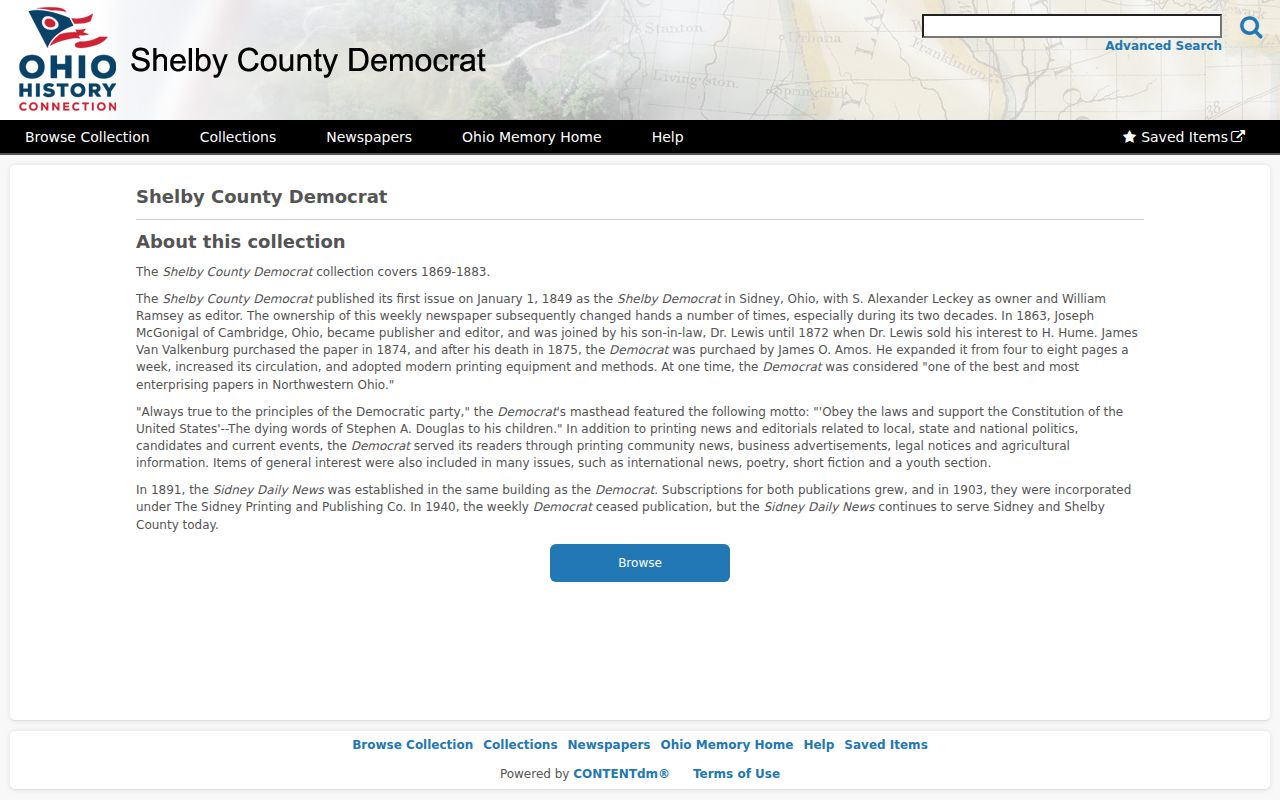
The collection view is a useful bridge between Sidney directory years, but a newspaper notice remains a dated lead rather than a universal household record.
Reading Sidney City Directory Entries
A local commercial residential entry from the 1902-1960 material was not image-verified in the research. That means no supported claim can be made that every Sidney entry gives a spouse, occupation, telephone, owner mark, or any particular abbreviation. Start by inspecting the selected volume and its opening pages. Preserve its spelling, printed heading, page number, and the exact field labels or abbreviations that appear there.
| Verified 1900 source | Freeholder directory, official register, and county/Sidney maps. |
|---|---|
| Commercial entry fields | Not locally inspected for a universal field list. Read the actual issue before transcribing or interpreting an entry. |
| Abbreviations | Do not expand a mark from general practice unless the selected Sidney volume supplies its own key. |
| Address continuity | Compare the printed address with maps, newspapers, or a legal-description trail when it matters. |
- Criss-cross directory
- A directory arranged by address rather than name. Its presence in a particular Sidney volume must be confirmed by looking at that volume.
- Householder index
- An index organized around household or address information. Do not assume a selected Sidney issue includes one without inspection.
- Abbreviation key
- The printed explanation of shorthand in a volume. Photograph or note it before interpreting unfamiliar marks.
Sidney Directory Research Shelves
Three local channels do different work. Amos Memorial Public Library's genealogy gateway links local news, Heritage Hub, Sanborn maps, HeritageQuest, Fold3, digital-library resources, and Ancestry Library Edition. Amos Memorial Public Library is at 230 E. North St., Sidney, with posted hours of Monday through Thursday 9-8, Friday 9-6, and Saturday 11-4. Confirm whether a database is available remotely or only in the library before making a special trip.
The Shelby County Historical Society Resource Library/Archives and SCGS bring local abstract books, newspapers, atlases, maps, and specialist help into the search. SCHS's Ross Center archives post resource links and archive information; published hours are Monday through Friday 1-5 and Saturday by appointment. The archives list 937-498-1653 and info@shelbycountyhistory.org. SCGS's research center is at Ross Historical Center, 201 N. Main Ave., and can make basic research requests for a donation.
The SCHS resource-links page connects the local newspaper, atlas, and Sanborn trail to the historical shelves.
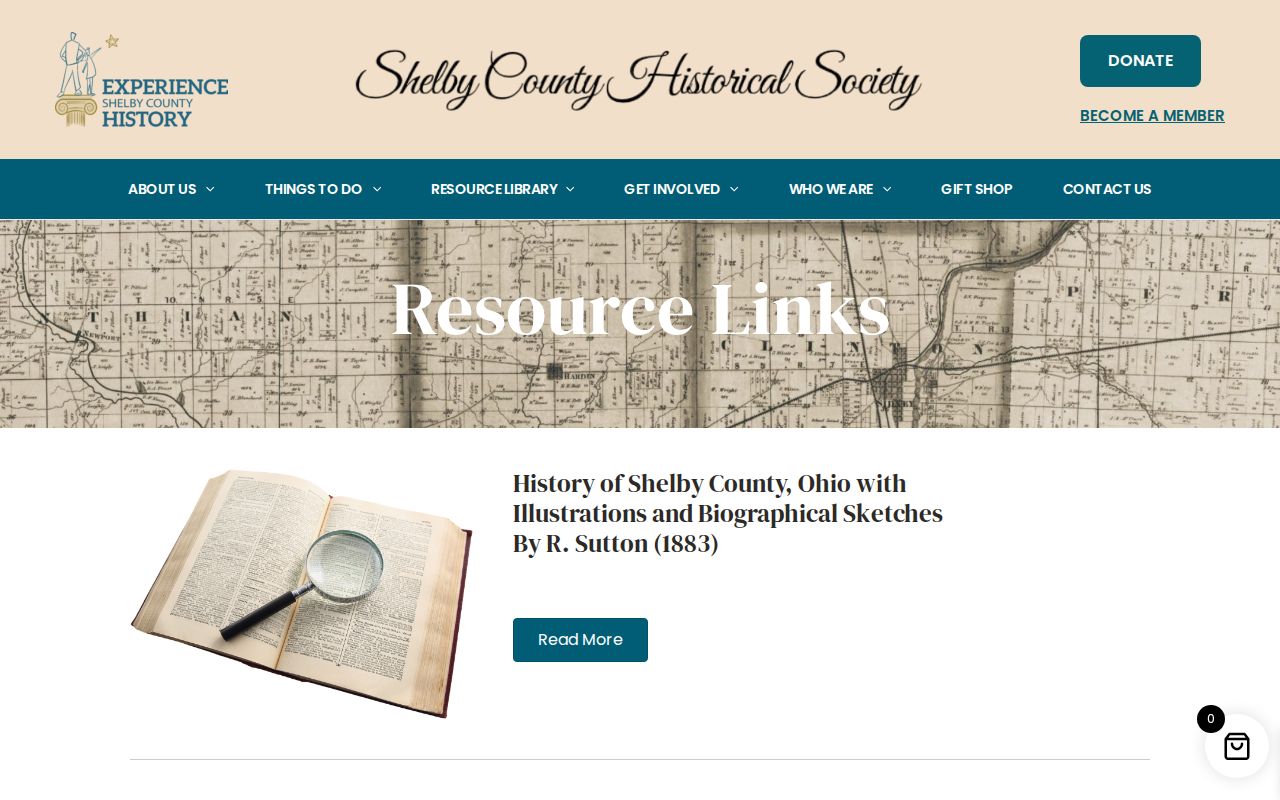
Use SCHS for local history and map context when a commercial Sidney directory issue is missing or needs a second source.
SCGS's publication and index list documents local tools such as birth and death abstracts, obituary indexes, will abstracts, and a Board of Health death register abstraction.
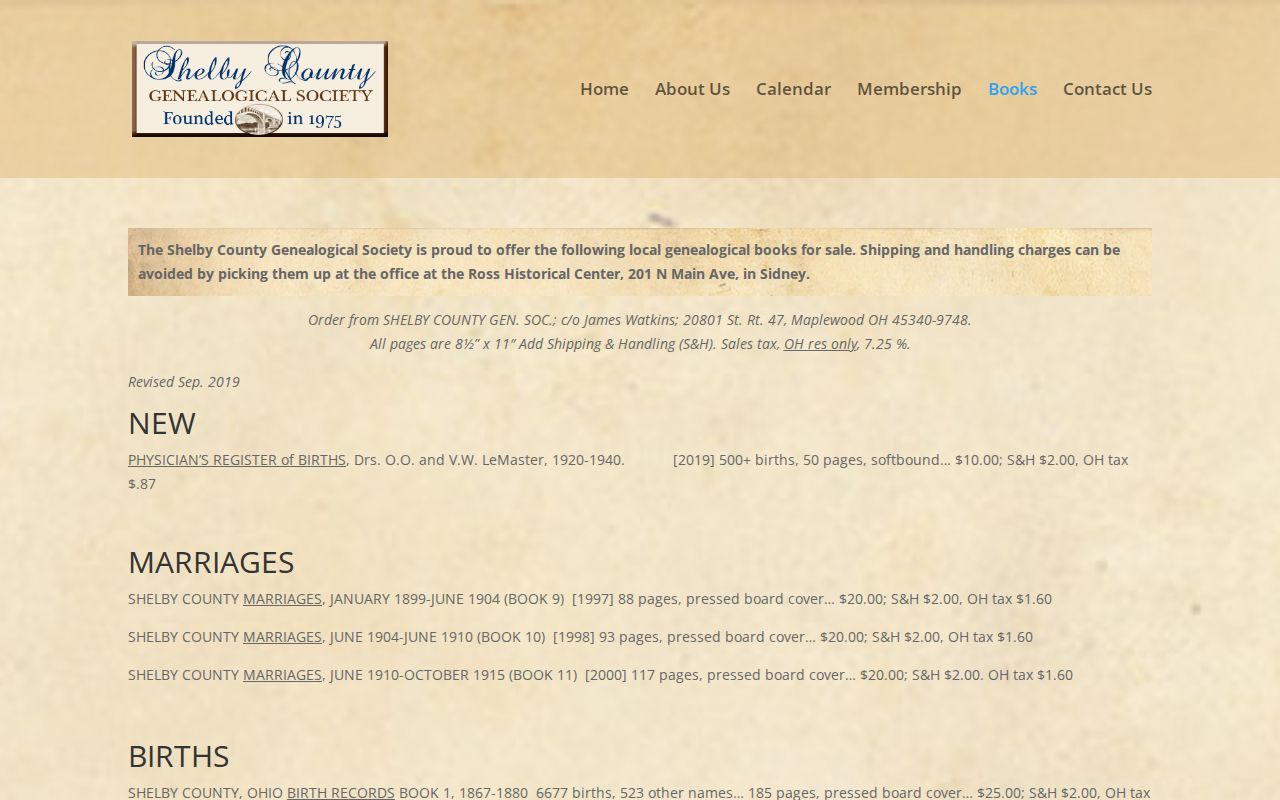
The SCGS list is an index-and-abstract route, not a substitute for a certified county original when an official copy is required.
Sidney Directory Maps and Census
Pair a directory year with a census year and the map closest to the question. Federal census schedules are publicly available through 1950 under the 72-year access rule. Sidney's verified Sanborn editions are 1887, 1892, 1898, 1907, and 1914. They show building footprints and street context, not resident names. The Library of Congress 1898 Sidney Sanborn edition is one documented map starting point.
Historic street numbers can need local comparison. SCHS reports an example in which a 1902 directory location on Poplar Street corresponds to a differently numbered present location, but that one report is not evidence of a citywide numbering conversion. Check more than one map or historical source before matching an old printed address to a modern place.
| 1887 | Documented Sidney Sanborn edition for early building and street context. |
|---|---|
| 1892 and 1898 | Additional map points for comparing a historic address or structure. |
| 1907 and 1914 | Later documented editions, useful for checking change over time. |
| 1790-1950 census | Federal household and date anchor, used alongside the appropriate directory issue. |
Sidney's 1900 Directory Quirk
The 1900 Atlas & Directory is often the first local result because it is freely available online. Its value is real, but its scope is narrower than the title may suggest. It is a freeholder directory and official register, not a complete Sidney resident roll. That distinction matters in a city whose population history and household count cannot be reduced to a county property list.
Use the atlas for names tied to freeholder and official-register material, then test the result against newspapers, a census schedule, map context, or a later commercial issue. The record can open a trail without closing the question of who lived at an address.
Tracing Sidney City Directories
Use a measured sequence when a family appears in one Sidney volume but not another. Write down the name exactly as printed, the address if the selected issue shows one, the volume date, and the page. Compare real issues on either side of a census year, not invented annual continuity. Newspaper notices can identify a move, probate event, obituary, social notice, or address clue. A parcel legal description or deed reference may help distinguish two similar street locations.
- Select the actual commercial issue or 1900 freeholder source closest to the known event.
- Copy the spelling, printed address, page, and any locally defined abbreviation exactly as shown.
- Check a nearby verified issue, allowing for the documented gaps rather than treating an absent year as a result.
- Pair the period with the relevant federal census schedule and compare the household and date context.
- Search the historic newspaper collection and local indexes for a move, estate notice, obituary, or other dated bridge.
When the question becomes a current parcel or a modern address trail, use the named street tools instead of stretching historical shelves beyond their purpose. The Sidney Street Directory has the address-keyed county and city route. Note: A family-history conclusion should name the particular issue and companion source used, because no one directory type establishes every relationship in a household.
Hardin's Route to Sidney
Early records may point away from the present Sidney courthouse. Shelby County was established in 1819, Sidney became the county seat in 1820, and the original seat was Hardin. The 1875 atlas describes the first court meeting in a Hardin log cabin before the move. SCGS also cautions that pre-1819 material may belong in Hamilton, Montgomery, or Miami County repositories.
That geography explains why a very early family search can require a county-boundary check before a Sidney city directory, map, or archive request. Local abstracts, government originals, newspapers, and maps form a two-track research path rather than one uninterrupted local file.