
Start a Sidney Resident Search
No single roll lists every household in Sidney. Start with the question you are asking. A Shelby County parcel record links a name to a property, but its location, owner-contact, and taxpayer fields must be read separately. Ohio's voter tools confirm a registration and precinct once a name is entered. A court result shows a public case relationship, not a street address. Older questions call for dated sources: newspapers, census schedules, or an actual directory issue. Keep the source name and date beside every result. Then seek a second independent record before tying a person to an address.
Remember the limits. A current owner is not always the occupant. A voter confirmation is not a street roster. The records work together, but they never collapse into one answer.
- Enter an address, parcel number, or listed owner in the Shelby County Auditor Real Estate Search. Save the parcel ID and legal description with the displayed address.
- For a full name, use Ohio Voter Search or the Shelby form as a confirmation route. It requires name information and does not open a general street browse.
- Check the Clerk public-search information when a public case may supply a time-stamped party record. Try documented spelling variants.
- Use the Recorder trail for a land question, then turn to the library, SCGS, or SCHS for the historical evidence around an older address.
- When no online path reaches the record, make a focused request to the custodian under Ohio Revised Code §149.43 and state the record type, date range, and format sought.
Note: A date, a field label, and a second source matter more than a loose match on a familiar name.
Sidney Resident Record Custodians
Sidney is the Shelby County seat. The property, land, court, election, and city-record routes all sit in one community. The Auditor comes first for a parcel. The Recorder holds recorded land instruments. The Clerk keeps the stated Common Pleas categories plus older counter records. The Board of Elections provides voter-confirmation and report channels. These offices hold different kinds of evidence, so their names should never be used interchangeably. The address-by-address street route extends the work. It does so without mistaking an owner field for a household list.
Shelby County Recorder
129 E. Court St., second-floor Annex
Sidney, OH
937-498-7270
Sidney Residents Through Parcel Fields
An address-led Sidney residents directory search starts naturally with the Auditor, whose Quick Search accepts a parcel, owner, or address. The mapped parcel layer adds filters for a listed-owner name, location address, parcel number, school district, sale, value, land use, class, and Location City State Zip. Officials separate a physical location from the owner and taxpayer contact fields. That separation helps when records disagree. It still does not prove an occupant.
| Auditor search control | How the Shelby tool describes it |
|---|---|
| Quick Search | One text box for parcel, owner, or address. |
| Parcel Number | Entered without dashes or dots; the portal gives examples in more than one parcel pattern. |
| Listed Owner Name | Supports a Last First or Last%First style entry. |
| Location City State Zip | A multi-select filter, useful for parcel attributes rather than a postal-boundary answer. |
See the Auditor property-search screen before entering a record. 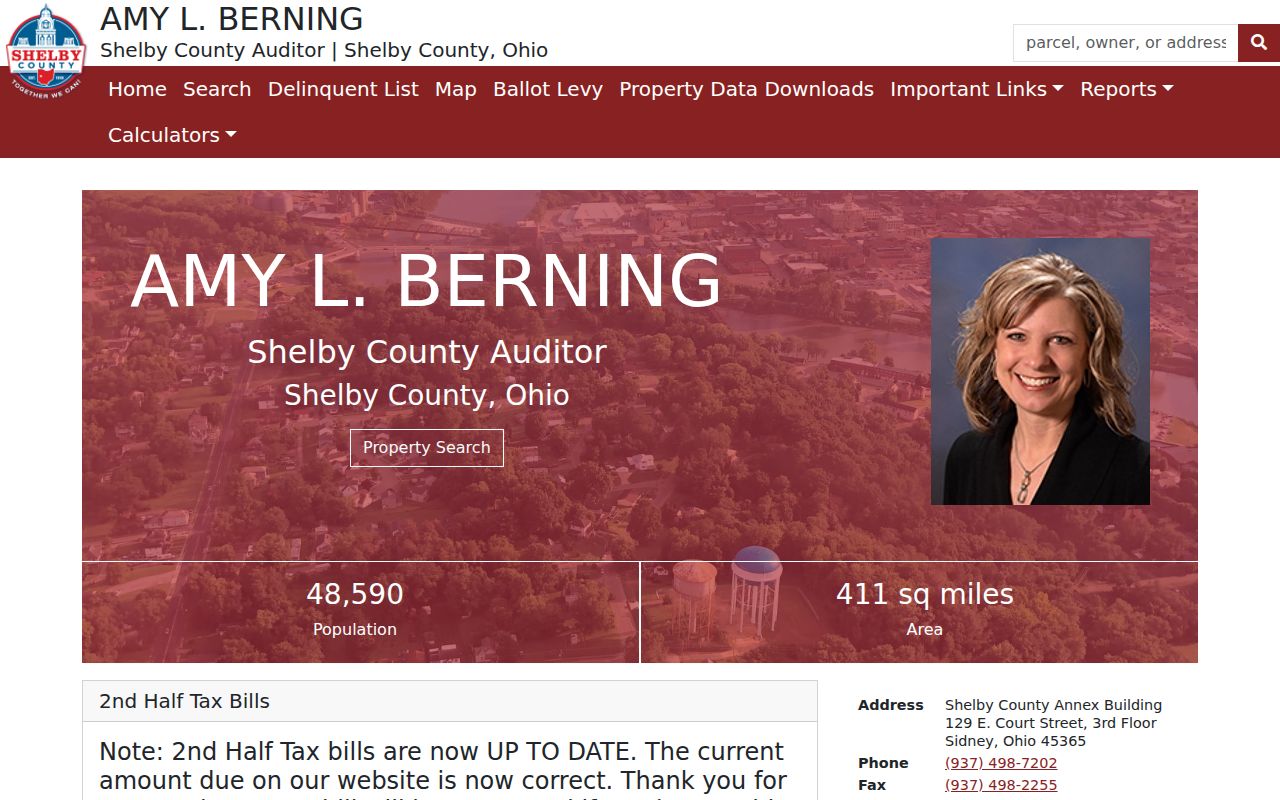 The search screen shows why a name, a parcel number, and a street address can start different versions of the same property question.
Sidney Resident Trails in Recorder Books
The Recorder's records reach back to 1818. The stated online index begins July 1, 1989. That gap matters for any family or house-history question. CountyFusion is the current authenticated portal, so an older transaction may still require a copy request or a visit even though the county holds the original. A Recorder entry documents a filing or transfer. It does not prove that everyone linked to the property lived there.
The Shelby County Recorder page also points to FraudSleuth, a free alert service that can monitor selected name spellings for filings in this office. 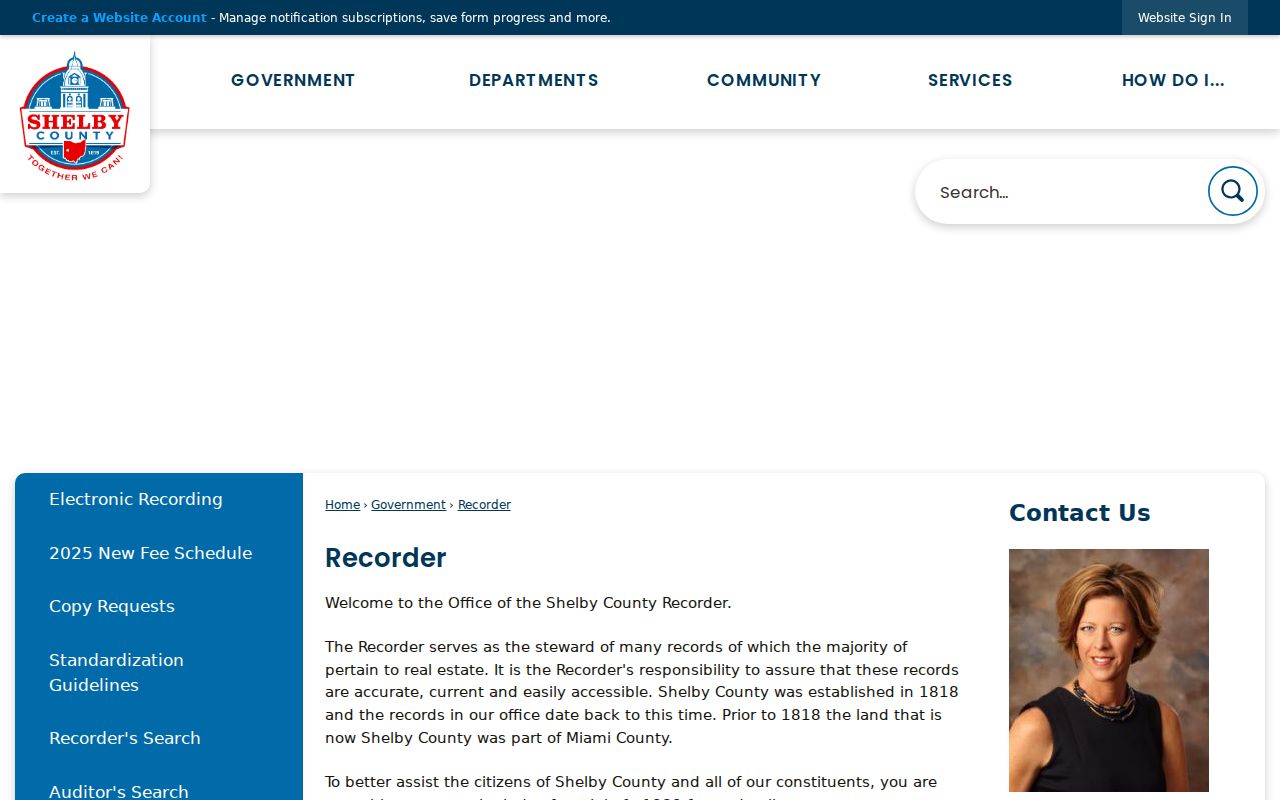 An alert can flag a newly filed instrument, but the Recorder warns it cannot prevent fraud or decide a document’s validity.
Older-document path. The Recorder accepts a volume-and-page copy request by email or fax; the research lists $2 per email or fax page and no fixed processing time.
Sidney Resident Registration Checks
Ohio's statewide voter search asks for a first name, last name, and county. The Shelby form wants first and last name and carries a daily-update notice. Both are useful for confirming a registration, precinct, or polling location. That works once a person is identified. Neither is a street-by-street resident roster. For a block question, the Board of Elections separately lists Street Report Generation and precinct-report tools. These are the better official route, subject to the statutory exclusions.
The Ohio voter-lookup interface is shown below. 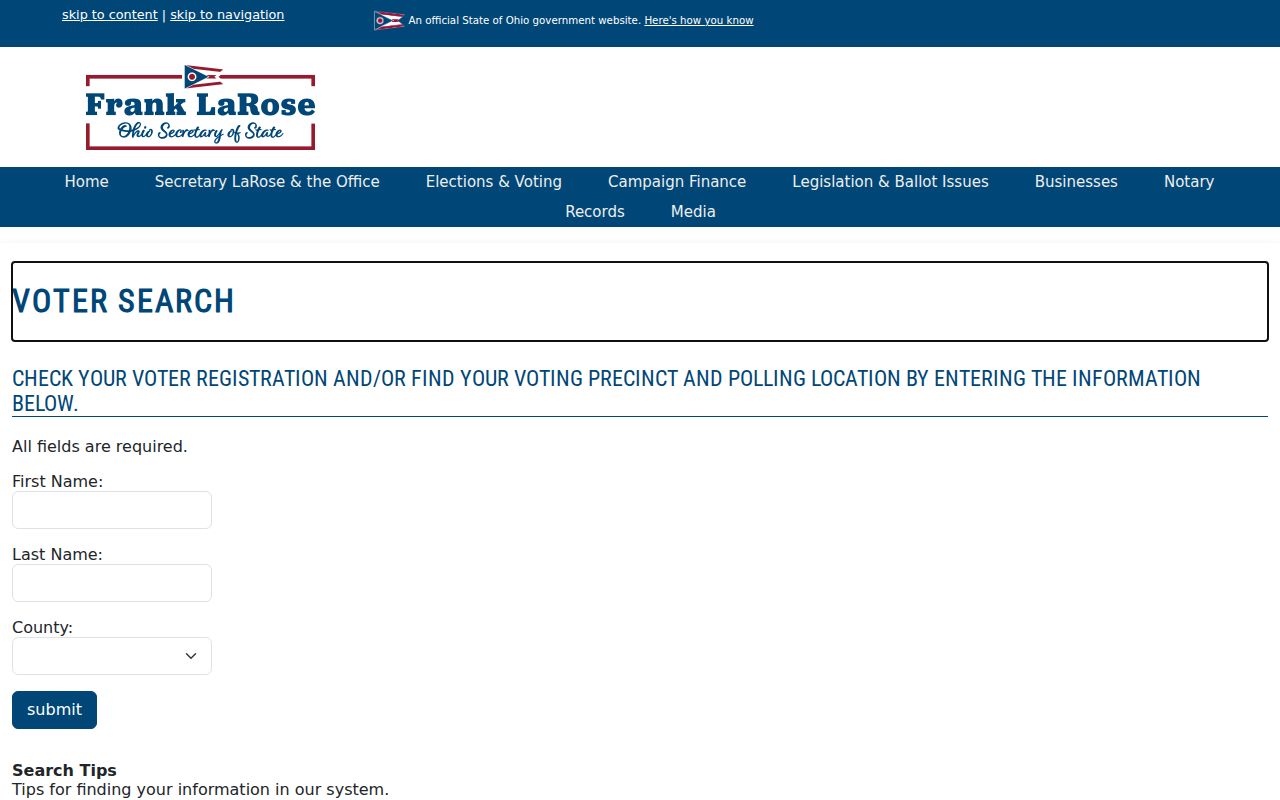 Ohio Revised Code §3503.13 excludes identifiers, contact details, confidential records, and protected addresses from the public registration data.
Note: A voter result can confirm a limited election record, not every adult, renter, or household member at an address.
Current Sidney Resident Directory Sources
Current directory evidence in Sidney comes from several narrow records, not one public book of households. The property system follows parcels and listed owners. Voter tools follow registered voters. Land records follow people who signed recorded documents. City staff listings cover public offices only. The sources below serve best when their limits stay in view.
| Source | Who It Lists | Keeper | Access |
|---|---|---|---|
| Auditor parcel record | Listed owners and parcel-linked fields | Shelby County Auditor | Free official search |
| Voter registration lookup | Eligible registrants after required name entry | Ohio and Shelby elections offices | Free, with protected data withheld |
| Recorder instruments | Grantors, grantees, and document chronology | Shelby County Recorder | Online account route after 1989; office bridge earlier |
| City staff directory | Published government contacts only | City of Sidney | Free City directory |
| Police and permit records | Requested reports or address activity, as available | City departments | Request and portal routes |
For a question about one named person, the Sidney resident lookup workflow keeps property, voter, court, and vital-record routes separate. A false match is easier to spot before it hardens into a conclusion.
Sidney Resident Names in Court Records
A Sidney court index pays off when three things line up. You need a name, a case category, and a time period. Shelby Common Pleas lists criminal, civil, domestic-relations, appellate, and judgment-lien categories. Its internet data begins October 1, 1987. Older records stay at the office. The Clerk advises trying spelling variants. Use at least the first three letters of a last name and one letter of a first. A date of birth alone is not a search key.
Common Pleas sits at 100 E. Court St. It handles serious civil, property, tort, contract, criminal, administrative-appeal, and domestic-relations matters. Published hours run 8:30 to 4 Monday through Thursday and 8:30 to noon on Friday. The online information intentionally excludes civil-stalking and sexually-oriented-offense protection orders. Domestic-violence protection-order information is also left out. The office handles those matters during business hours. So an online nonmatch proves nothing. Never infer from a search result that a sensitive matter does or does not exist.
Review the Sidney Municipal Court eAccess route as a local court starting point. 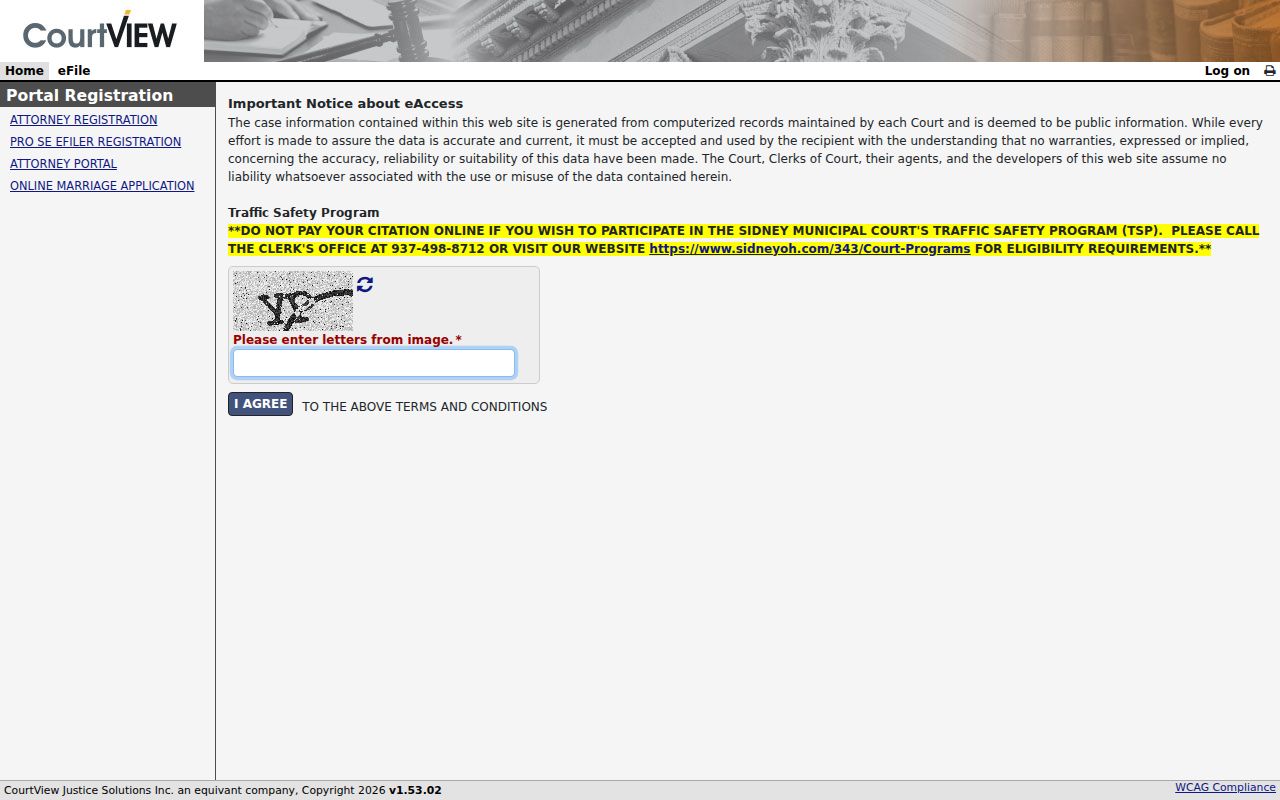 Dynamic controls and terms screens prevented a verified full field inventory, so the court counter remains the accurate fallback for detailed access or certified-copy questions.
Sidney Records Available by Request
Sidney Police Records handles arrest files, calls-for-service logs, incident reports, and crash reports. Most reports become available within 48 to 72 hours. Requesters can ask by email, mail, or in person at the office. The City's form asks for the record type, the date, and the location of the incident. It also asks for any names if known, plus a detailed description. Ohio Revised Code §149.43 does not require a written request. The form can still make a narrow search easier. Paper copies of reports may cost 5 cents per page.
Ohio’s Public Records Act text explains the prompt inspection and reasonable-copy standard. 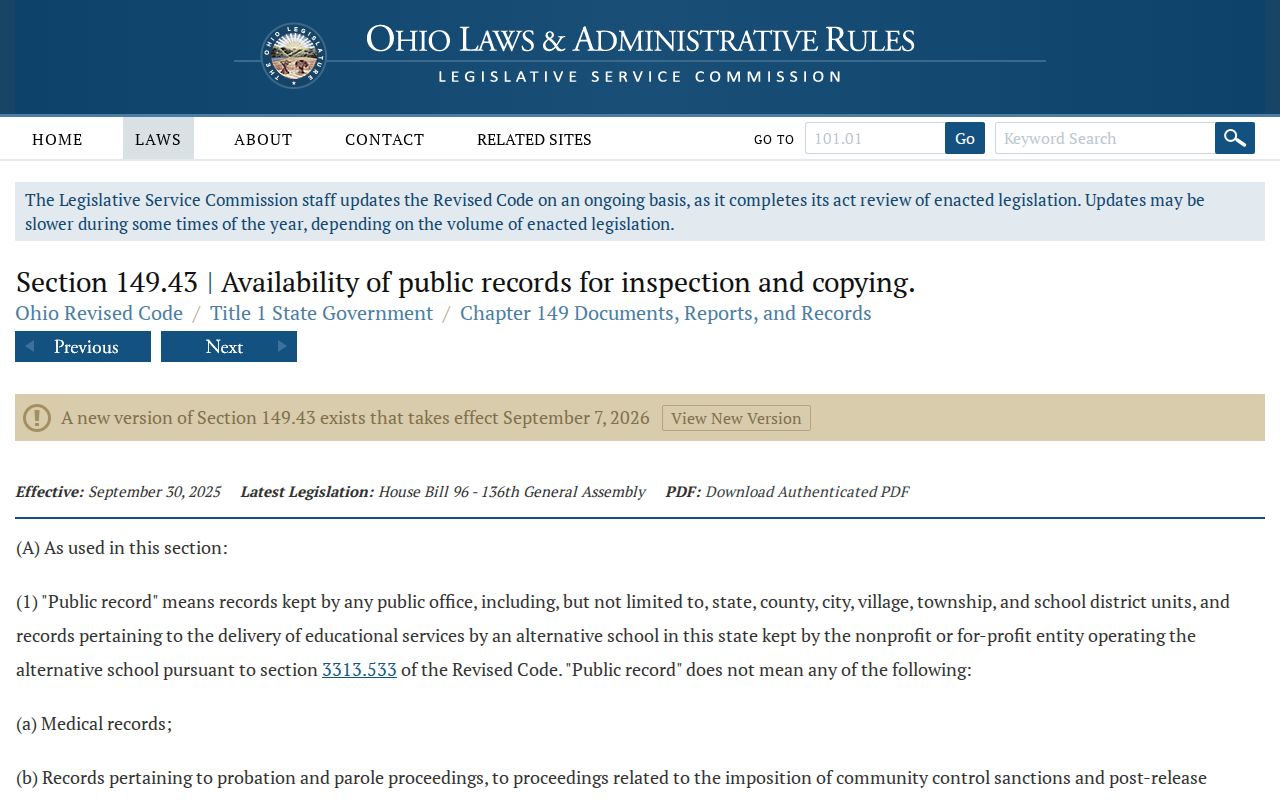 It also permits redaction where a legal exemption applies, which is why a request should identify the wanted record instead of demanding every item tied to a name.
Note: The Shelby Clerk policy says it will satisfy or acknowledge a request in writing within three business days.
Historical Sidney Resident Directories
Working with historical Sidney resident directories means picking a real issue and accepting its gaps. The 1900 American Atlas volume is a freeholder directory and official register. It is not a complete city roll. Commercial issues exist for 1902, 1929, and 1931. The gaps between them reflect what survives, not proof that anyone moved. The Ohio Genealogical Society holds selected later issues as well. The Sidney historical directory collections route details the shelves, newspaper runs, maps, and search methods.
Amos Memorial Library, SCGS, and SCHS are the local bridges. They help when a web index begins too late. Pair a directory clue with a census record, a deed, a map, or a newspaper. A directory entry alone is never a full household record.
Amos Memorial Public Library sits at 230 E. North St. in Sidney. Hours are Monday through Thursday 9 to 8. Friday hours are 9 to 6, and Saturday hours are 11 to 4. Its genealogy page links to the Sidney Daily News Collection, Heritage Hub, newspaper services, Sanborn maps, HeritageQuest, Fold3, Digital Public Library of America, and Ancestry Library Edition. Several of those services are in-library resources, so confirm remote access with staff. SCHS adds historical resource links and archives support. SCGS contributes microfilmed newspapers, courthouse materials, family genealogies, books, and local abstract indexes.
The digitized Shelby County Democrat collection is a strong historical bridge. Ohio Memory dates the Sidney-run collection 1869 to 1883 and preserves 705 issue objects. Search for a specific person, place, or date. Then read the page image, because historical OCR misreads names easily. The 1872 material alone can hold officer information, estate notices, local advertising, and a railroad timetable. Every item belongs in its dated context.
Sidney Resident Life-Event Records
Life-event records in Sidney sit with separate custodians. The Ohio Department of Health Vital Statistics issues certified birth and death certificates. Shelby Probate is the county path for marriage material. The Clerk of Courts holds the actual divorce case files. Under R.C. 3705.21 the state receives marriage and divorce abstracts. That abstract never replaces the county copy channel. A certified record is evidence under the statute. An obituary, index, or newspaper notice is simply a different kind of lead.
The Ohio Vital Statistics portal is the state entry point.  For historical family work, SCGS abstracts, local newspapers, and probate materials can extend a trail when a modern certificate request is not the right tool.
Sidney Resident Records Before Shelby County
Sidney's early-record geography differs from its modern courthouse map. Shelby County was established in 1819, and Sidney became the seat in 1820. The first court actually met in Hardin before the move. SCGS cautions that a pre-1819 trail can lead to Hamilton, Montgomery, or Miami County repositories. The Recorder holds records from 1818, though its online index starts far later. Treat that warning seriously, and never invent an early Sidney address to fill the gap.
- Parcel
- A mapped unit of property with its own identifying fields and boundaries.
- Index
- A finding tool that points to a record; it is not always the record image or a certified copy.
- Legal description
- The land description used in recorded transactions, often more stable than a street address.
- Criss-cross directory
- An address-oriented directory arrangement, useful only when the specific issue is available and understood.
Sidney Resident Search Safety Limits
Ohio's Safe at Home program shields people facing domestic violence, stalking, human trafficking, or sexual-offense dangers. Participants get a substitute address they can use in place of their real one. R.C. 111.431 also allows a real-property confidentiality notice, which restricts release of identifying details tied to an address, parcel number, or legal description. So a blank or redacted entry in a Sidney residents directory result can be deliberate protection, not a glitch.
Other Shelby County records carry their own limits. R.C. 149.43 exempts medical records. It also exempts confidential law-enforcement investigatory files, some adoption and juvenile material, and anything sealed, expunged, or made confidential by other law. A custodian can release the open portion of a record while withholding the protected portion. The custodian should cite the authority for each redaction. When a request seems too broad, narrowing it works far better than assuming the office has shut the door on access. Narrow it by record type, date range, and address or case reference.
Safe at Home is not a general deletion tool. Eligibility is specific. R.C. 111.42 covers an adult applying for self, a minor, or a ward. The person must live, work, or attend school in Ohio. They must fear harm from specified domestic violence, stalking, trafficking, rape, or sexual-battery circumstances. Applications go through an assistant and require a notarized fear statement plus a recommendation. The Secretary of State must rule within ten business days on a complete application. Certification runs four years, and the administrative rule allows a 60-day renewal grace period.
Ohio also offers narrower online-redaction paths. Under R.C. 149.45, designated current and former public-service workers can ask that personal information be redacted online. The process does not reach every resident, though. Recorder and court materials get separate redaction treatment, including limits on social-security and account identifiers in filings. When a parcel, deed, or court screen in a resident lookup seems incomplete, ask the records office which authority controls the withheld field. Do that before calling it an error. For a true access dispute, R.C. 2743.75 offers an expedited Court of Claims action with a $25 filing fee and a special-master process. That remedy is a last resort, not a search shortcut. A focused request and reasonable production time should come first.
The Ohio DRC Offender Search illustrates another limited official lookup. 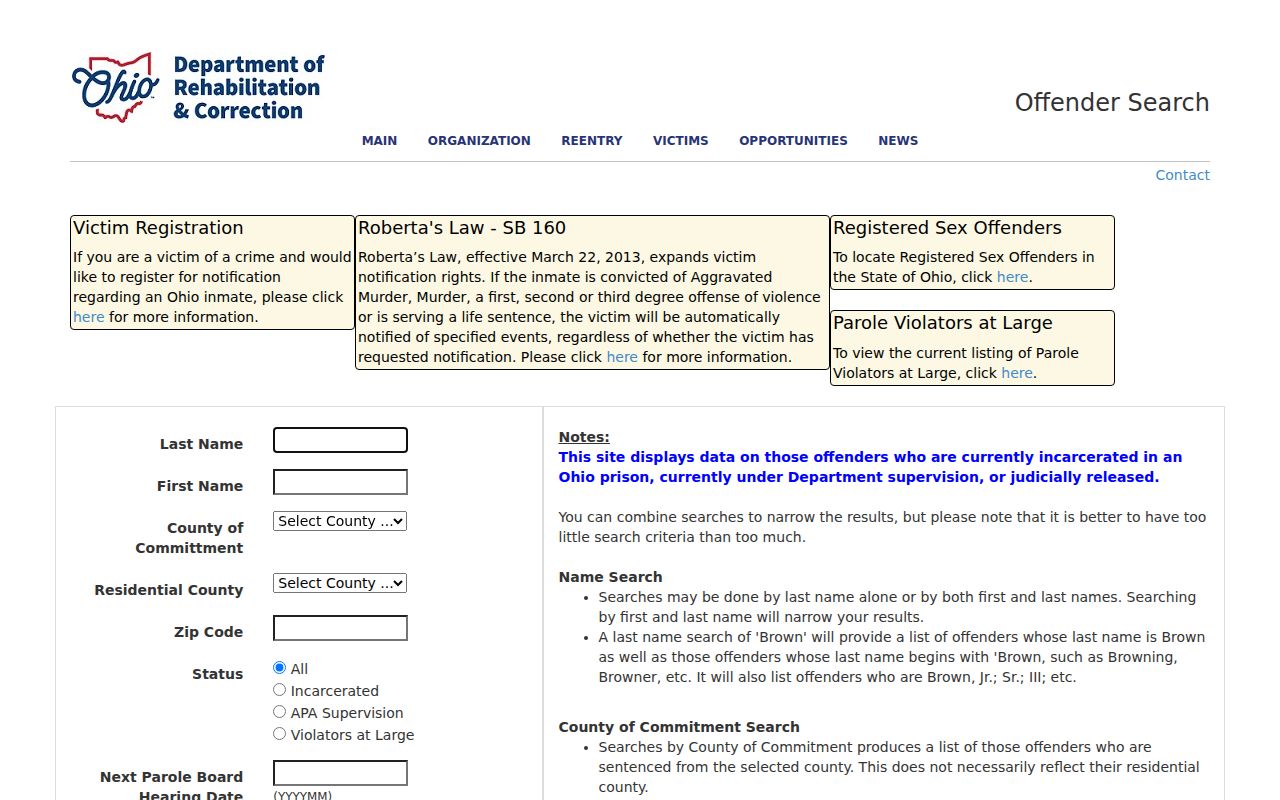 It covers state custody and supervision categories, not a current-address directory, every jail record, or sealed matters.
Lawful research only. Use public sources for family history, estate work, property curiosity, civic questions, or scam verification. Do not use a record to pursue, threaten, harass, or harm anyone.